Introducing: Conversations with My Altar (A Series)
Today's Altar Reflection: On Learning to Ask Better Questions

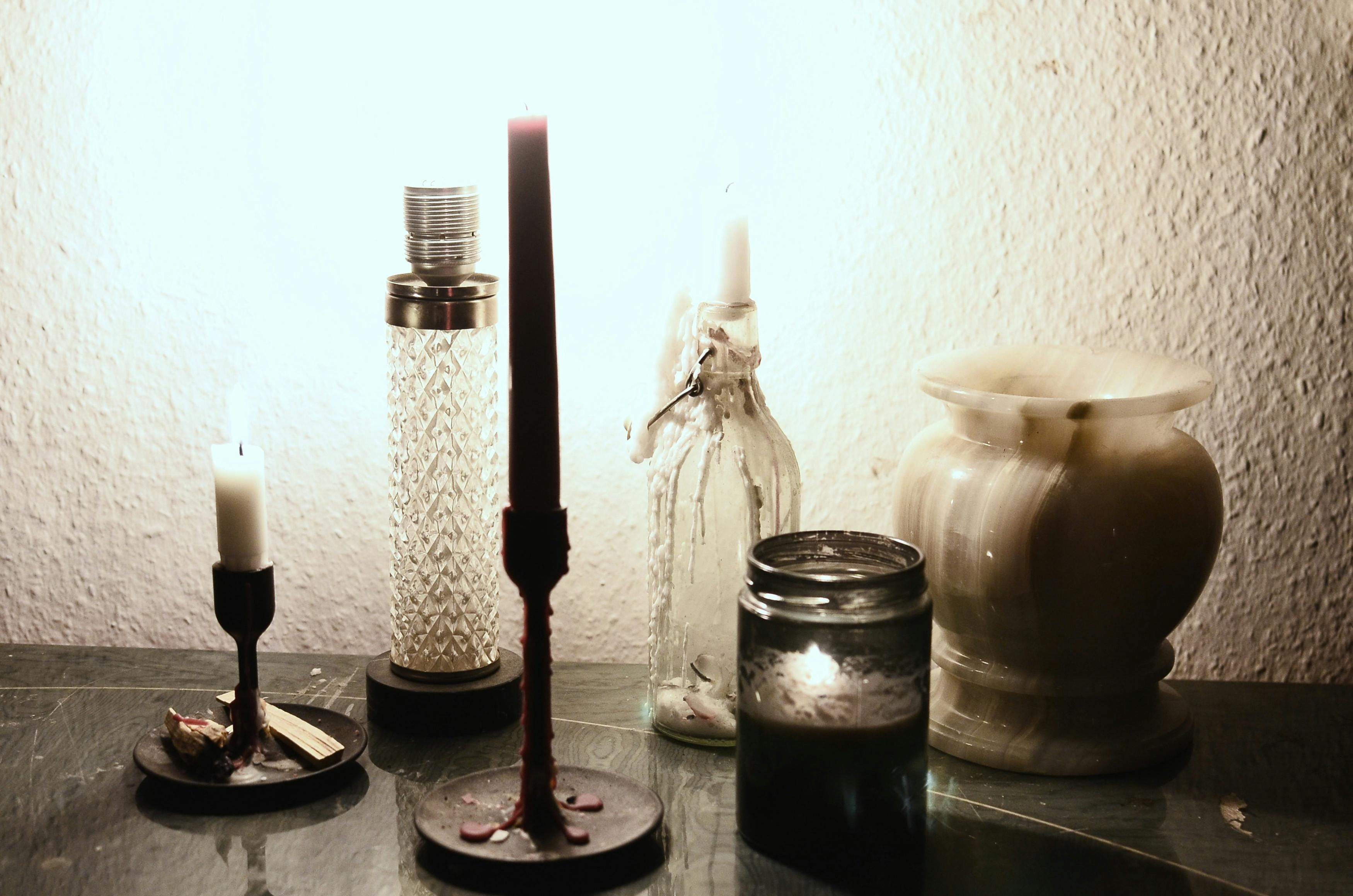
Welcome to the inaugural post series entitled Conversations with my Altar.
This series explores some of the ongoing threads I’m unraveling, spiritual or otherwise, when I allow myself the time and space to connect and check in with myself.
The questions I respond to here reflect years of work I’ve done (and continue to do) to feel into a lesson instead of thinking around it.
I hope you enjoy these stories.
I’m sure you’ve heard the phrase, “There’s no such thing as a stupid question.”
Well-meaning teachers would say it to encourage a shy student who never spoke up in class to finally speak. However, growing up, I learned that not only were there stupid questions, but you could also ask too many of them.
My parental figures often disregarded or left unanswered the “silly” questions I’d ask. While I had to research others myself.
Though perhaps not ideal for a child exploring, I’m now grateful as an adult for parents who made finding answers a challenge. Because it allowed me to collect knowledge and get lost in stories and books in ways that I don’t think I would have otherwise.
As a child born in the early 90s with Silent Generation grandparents, they were slow adopters of technology (including computers). So I’d spend hours upon hours pouring through encyclopedias, dictionaries, and other reference materials at my grandmother’s house, searching for the answers to my many questions.
When it was time for research in school, I’d recreate the scene from my grandparents’ house: books and notes spread around me on the floor, forming a sacred circle of knowledge.
As I got older, the academic questions morphed into more life/philosophical questions, and I found myself stuck on who to ask or what to do. So I went back to what I knew worked: I cracked open a book or surfed the internet, looking for the perfect answer to placate me.
But the problem with always “seeking” something outside of yourself is that it becomes easier to disconnect from the body.
Instead of “feeling,” I intellectualized.
Logic became more comforting than emotions, and feelings took a backseat to learned knowledge.
Being outside of my body became the safest place for me to be because, in my mind, if I felt very little, then I could never get hurt. Little did I know that’s not how feelings work.
Embodied somatic practices like yoga continue to teach me that feelings and emotions stay lodged inside the body long after your mind has processed them. The only way to work out any “stuck” emotions is to move through them. Or, as my double Scorpio dad would put it, “you can’t logic your way out of an emotion.”
So the solution for me to get out of my mind and into my body has been to ask better questions. Instead of ruminating or pathologizing what I’m feeling, I ask my body what it needs to process.
When I’m hit with sudden grief about my dismissal, I don’t go searching for answers in books because that’s not where I’ll find my healing. Instead, I go to the gym, or walk over to my yoga mat, or lace up my shoes for a walk around the neighborhood.
Learning to ask questions of my body has allowed me the freedom to look grief in the eyes without putting meaning to it. My grief doesn’t need a story attached to it to be healed. It only needs to be felt.
What have you been sitting with lately?